
15 July 2026
Kitchen Worktops Compared: The Best for a Bath Kitchen
The worktop is the surface you touch every day, the thing that takes the heat, the knives and the spills, and often the single most eye-catching part of a new kitchen. It is also where a lot of the budget lands. In Bath, two local factors shape the choice more than most people expect: the hard water that comes with the city’s limestone geology, and the period homes where walls are rarely straight and worktops need careful templating. Get the material right and it will look good for decades. Get it wrong and you will notice within a year. Here is an honest comparison of the main options and how they hold up in a Bath home.
Choosing a Worktop in Bath: Where to Start
Before you fall for a colour, think about how you actually use the kitchen. A busy family kitchen that does three meals a day has different needs from a smart second kitchen that mostly hosts. Heat tolerance, stain resistance, maintenance and cost all pull in different directions, and no single material wins on all four.
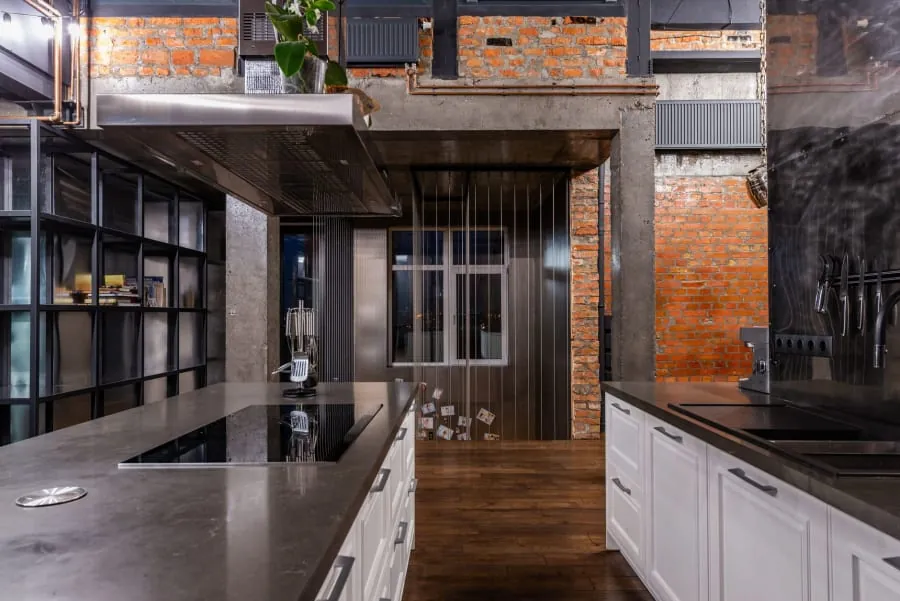
It is also worth being realistic about your walls. Many Bath homes, especially the Georgian and Victorian ones, have walls that bow and floors that slope. That affects templating and fitting, and it can rule out cheaper pre-cut options that assume a straight run. Our kitchen renovation service plans the worktop around the room rather than forcing the room to fit the worktop.
Laminate Worktops: Budget-Friendly and Better Than Ever
Laminate has come a long way. Modern versions mimic stone, concrete and wood convincingly, with textured finishes that no longer feel plasticky. At around £50 per square metre installed, it is by far the most affordable option and a sensible choice for rentals, utility rooms or a first kitchen.
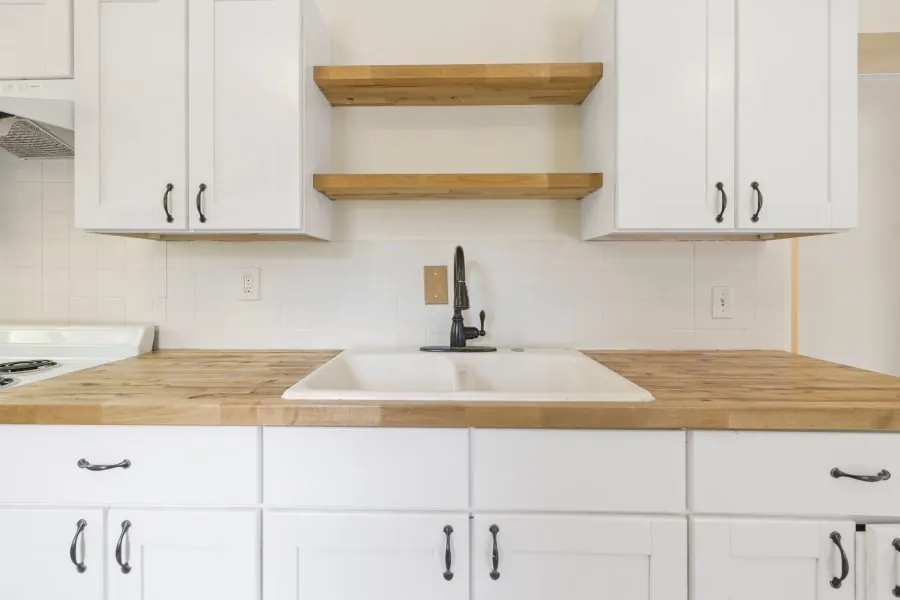
The trade-off is durability. Laminate does not love heat, and once the surface is chipped or water gets into a joint, it cannot be repaired - it has to be replaced. In a hard-water area, keeping seams sealed and dry matters more than most people realise. For a lot of Bath homeowners, laminate is the smart way to get a good-looking kitchen now and upgrade the worktop later.
Quartz: The Low-Maintenance All-Rounder
Quartz is engineered from ground natural quartz bound with resin, which makes it non-porous, consistent in colour and very hard-wearing. That non-porous surface is exactly why it suits Bath: it does not absorb water or stain, so hard-water marks wipe straight off and there is no sealing to keep on top of.
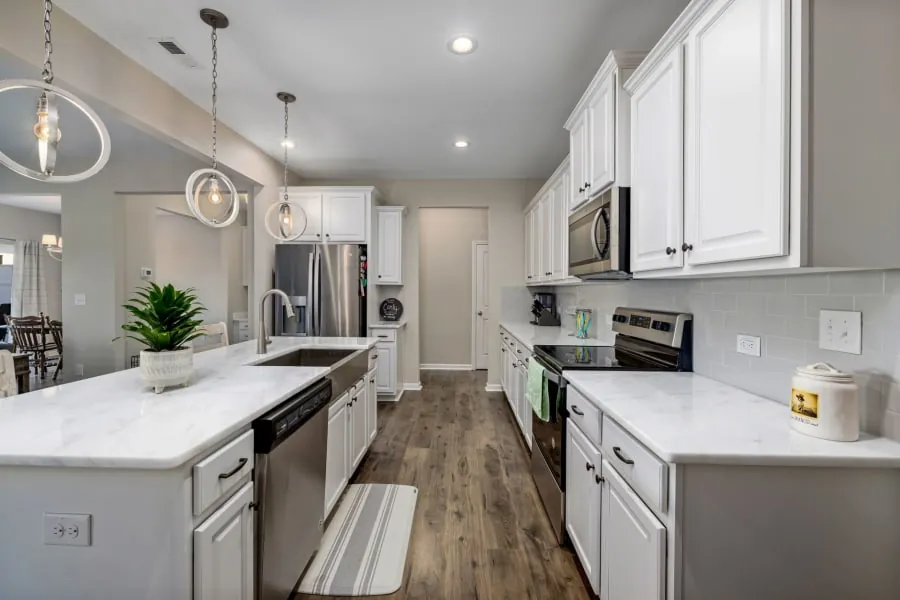
Expect around £375 per square metre. It is not indestructible - it dislikes sudden heat, so you still need a trivet for hot pans - but for everyday resilience and low upkeep it is hard to beat. Checkatrade’s quartz versus granite cost guide is a useful read if you are weighing the two engineered-versus-natural options side by side.
Granite and Natural Stone: Character That Lasts
If you want a surface with genuine natural character, granite delivers. No two slabs are identical, it handles heat better than quartz, and a well-chosen piece can be the centrepiece of the room. At around £435 per square metre it is the priciest of the mainstream options, and it suits period Bath homes where natural materials feel at home.
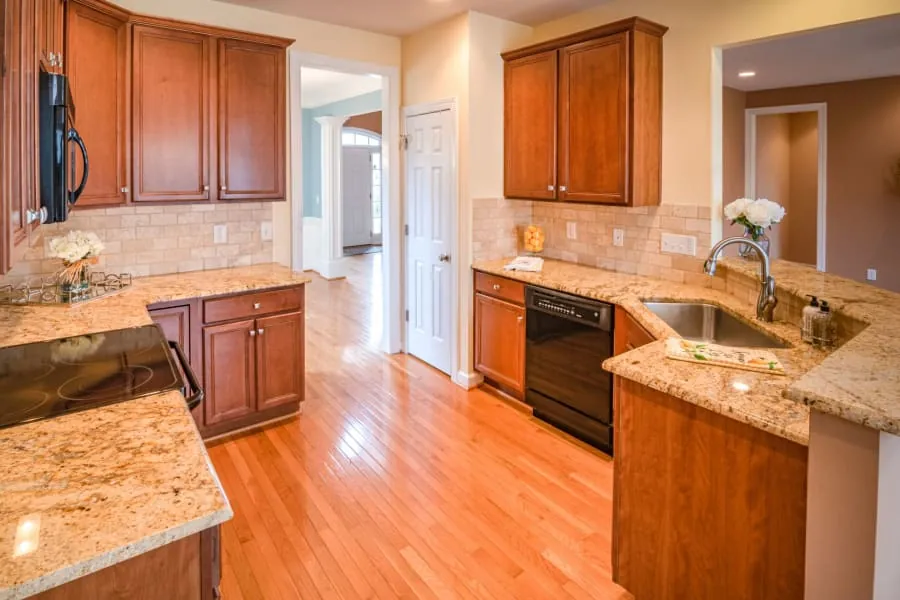
The catch is that granite is porous and needs sealing, usually once a year, to stop water and oil soaking in. In a hard-water city that maintenance is not optional - skip it and you will see dull mineral patches around the tap and sink. If you like the ritual of caring for a natural surface, granite rewards it. If you do not, quartz gives you a similar look with none of the upkeep.
Solid Wood Worktops: Warmth for Period Bath Homes
Solid wood, usually oak or walnut, brings a warmth that stone cannot match, and it sits beautifully in a traditional or shaker kitchen - the kind that suits so many older Bath properties. It can be sanded and re-oiled if it marks, so a wood worktop ages rather than wears out.
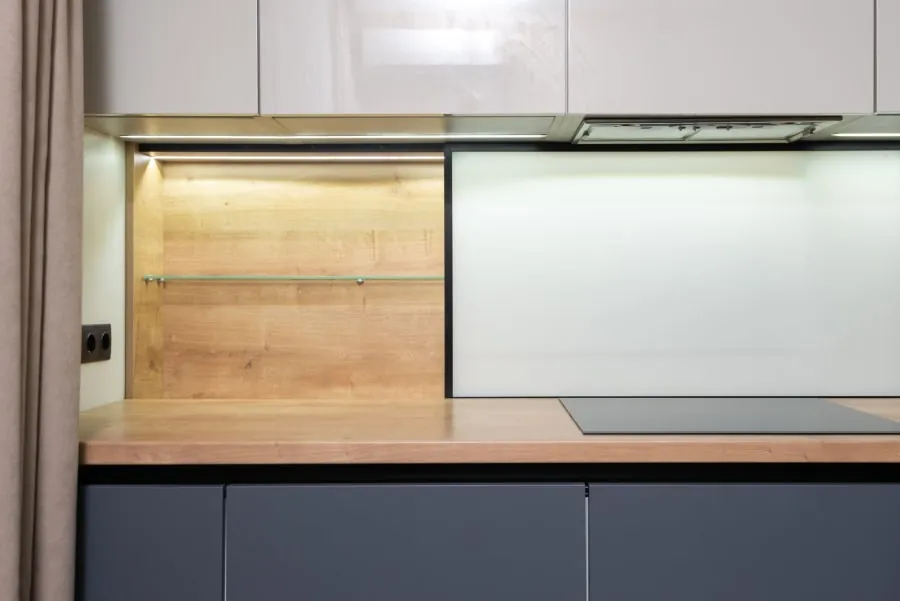
Wood and water need managing, though, and that is the local watch-point. Around sinks and in the naturally damp conditions of some older homes, timber needs oiling once or twice a year and prompt drying to avoid staining and movement. Keep it away from direct heat and looked after, and a wood worktop can last a lifetime while gaining character along the way.
Composite and Corian: Joint-Free and Hygienic
Solid-surface composites like Corian are worth knowing about, especially for a clean, modern look. Because they are made in sheets and joined invisibly, you can have long runs, integrated sinks and coved upstands with no visible seams - and no seams means nowhere for hard-water grime or bacteria to gather.
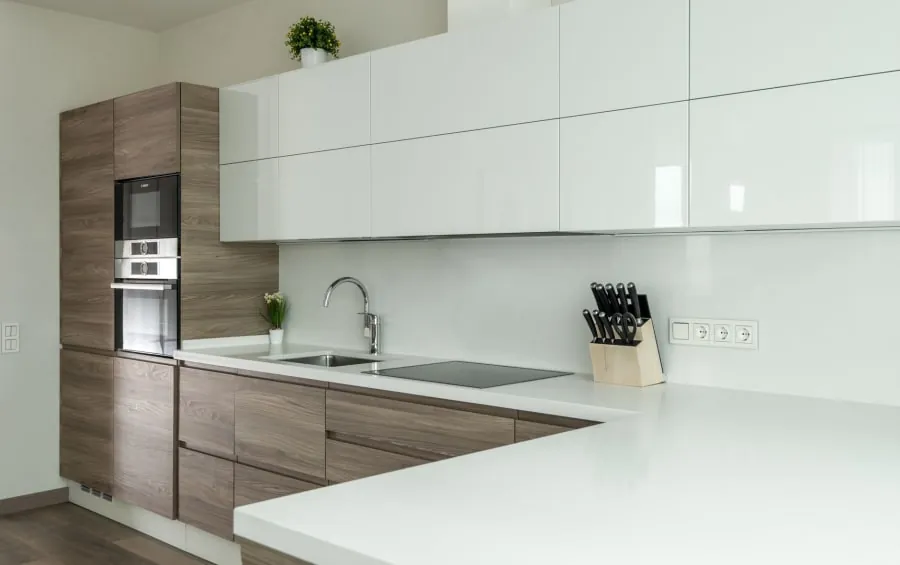
They are non-porous and repairable - light scratches can be buffed out - which makes them a strong choice for anyone who wants low maintenance and a truly minimal finish. They sit in a similar price bracket to quartz. The main limitation is heat, so, as with quartz, hot pans go on a trivet rather than straight on the surface.
Getting the Right Worktop for Your Bath Home
The honest answer to “which is best” is the one that matches how you live, what you can spend, and the quirks of your particular house. If you want low fuss in a hard-water city, quartz or composite. If you love natural character and will maintain it, granite or wood. If budget leads, modern laminate looks great and buys you time.
Whatever you choose, the fit matters as much as the material - a beautiful worktop templated badly against a bowed Georgian wall never looks right. For a sense of where a worktop sits in the wider budget, our guide to how much a new kitchen costs in Bath breaks the numbers down, and the cost of replacing worktops is a handy reference if you are only changing the surface. When you are ready, get in touch for a free quote and we will help you pick the right one and fit it properly.
Frequently Asked Questions
What is the best worktop material for a Bath kitchen?
There is no single best - it depends on budget and how you live. Quartz is the most popular all-rounder because it resists staining and copes well with Bath’s hard water. Granite suits people who want natural character and can live with a little maintenance. Laminate is the budget choice and now looks far better than it used to. Solid wood brings warmth to period homes but needs oiling. We help you match the material to the room and your day-to-day use.
Does Bath’s hard water affect kitchen worktops?
It can. Bath sits on limestone, so the water is hard and leaves limescale. On porous surfaces and around unsealed joints, mineral marks build up faster, which is one reason non-porous quartz is popular locally. Sealing natural stone properly and wiping spills promptly keeps any worktop looking its best for longer.
How much do kitchen worktops cost in 2026?
As a rough guide, laminate installed is around £50 per square metre, quartz around £375 per square metre and granite around £435 per square metre. Solid wood sits between laminate and stone. The total depends on the length of the run, the number of cut-outs for sinks and hobs, and how straight your walls are - period homes often need more careful templating.
Which worktop is easiest to look after?
Quartz and composite surfaces are the lowest maintenance because they are non-porous, need no sealing, and shrug off most stains. Granite needs occasional resealing, and solid wood needs oiling once or twice a year. If low upkeep is your priority - especially with hard water - an engineered surface is usually the easy answer.