
29 August 2025
The Best Tile Choices for High-Moisture Kitchen Areas
The Best Tile Choices for High-Moisture Kitchen Areas
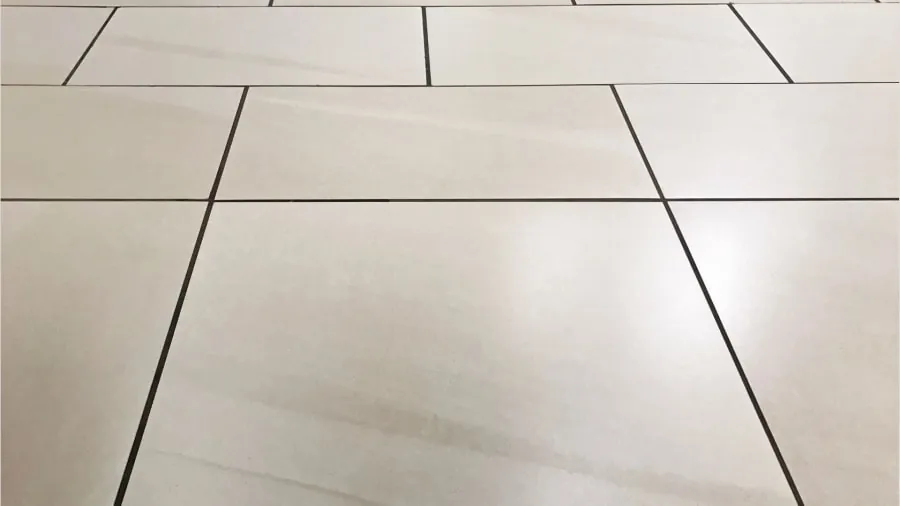
Not all parts of a kitchen take the same punishment. The zones around the sink, the dishwasher and the main prep area deal with constant splashing, steam and the odd spill, and the tile you choose there needs to cope with all of it. Get it right and the surface shrugs off years of daily use. Get it wrong and you see staining, lifting and grout that never looks clean. Here is how we guide Bath homeowners through the decision.
Porcelain vs Ceramic vs Natural Stone
The three materials most people weigh up behave quite differently once water is involved.
- Porcelain is our default recommendation for wet zones. It is fired harder and denser than ceramic, which means it absorbs almost no water - typically under 0.5%. That density makes it tough, frost-proof and very hard to stain, so it handles a busy sink area without complaint.
- Ceramic is a solid, cost-effective choice for walls and splashbacks that sit a little further from the water. It is slightly more porous than porcelain and not quite as hard-wearing underfoot, so we tend to keep it off heavily used floors and away from the wettest spots.
- Natural stone - marble, slate, travertine and the like - brings a look nothing else matches. The trade-off is porosity. Stone drinks water and stains unless it is sealed on installation and re-sealed over time. It rewards the upkeep, but it is not a fit-and-forget material.
Water Resistance Near Sinks and Dishwashers
The area right around the sink and dishwasher is where a tile really earns its keep. Water here is relentless, so we lean towards low-absorption porcelain and pay close attention to how the tile meets the worktop and the appliances. The joins and edges are where moisture tries to get behind the surface, and neat detailing there is what keeps water out over the long term. This is a big part of what our fitters plan during any kitchen installation.
Finishes, Slip and Safety
A wet floor and a glossy tile are a poor combination. Polished tiles look striking but turn slippery as soon as water lands on them, which is a genuine hazard near a sink or in a family kitchen. For floors we recommend a matt or lightly textured finish with a sensible slip rating - enough grip to be safe, not so much texture that it traps dirt. On walls, where slip is not a concern, gloss is fine and can bounce light around a darker room.
Don’t Overlook the Grout and Sealing
The best tile in the world is only as good as what surrounds it. Standard grout is porous, so in high-moisture areas we use and seal an appropriate grout, and for the wettest spots a flexible or epoxy grout gives extra water resistance. Natural stone gets sealed too, and we let homeowners know when a re-seal is due. These small steps are what stop moisture creeping in behind the surface where you cannot see it.
Choosing tiles for a wet zone is a balance of durability, water resistance, safety and looks. We are happy to bring samples so you can see how different materials sit with your worktops and units - explore our tiling services or get in touch to talk it through.
Frequently Asked Questions
Are porcelain or ceramic tiles better for areas around the sink?
Porcelain is the stronger choice near a sink. It is denser than ceramic and absorbs almost no water, so it stands up to constant splashing and the occasional overflow far better. Ceramic is perfectly good for walls and splashbacks a little further from the water, and it usually costs less.
Can I use natural stone tiles in a kitchen?
Yes, but with a caveat. Natural stone such as marble, slate or travertine looks beautiful, but it is porous and needs sealing on installation and re-sealing periodically. Left unsealed it stains and absorbs water. If you love the look of stone but want less upkeep, we can suggest porcelain tiles that mimic it convincingly.
What finish is safest for a kitchen floor that gets wet?
For floors near sinks and dishwashers we recommend a matt or textured finish with a decent slip rating rather than a high-gloss tile. Polished tiles look great but become slippery the moment water lands on them. A slightly textured surface gives grip without being hard to clean.
Does the grout matter as much as the tile in wet areas?
It matters a great deal. Grout is often the weak point, because standard grout is porous and can let moisture through over time. We use and seal an appropriate grout in high-moisture zones, and a quality flexible or epoxy grout is worth considering around sinks and dishwashers for extra water resistance.