
22 August 2025
The Hidden Impact: Selecting the Right Grout Colour for Your Kitchen Renovation
Choosing the Right Grout Colour for Your Kitchen Renovation
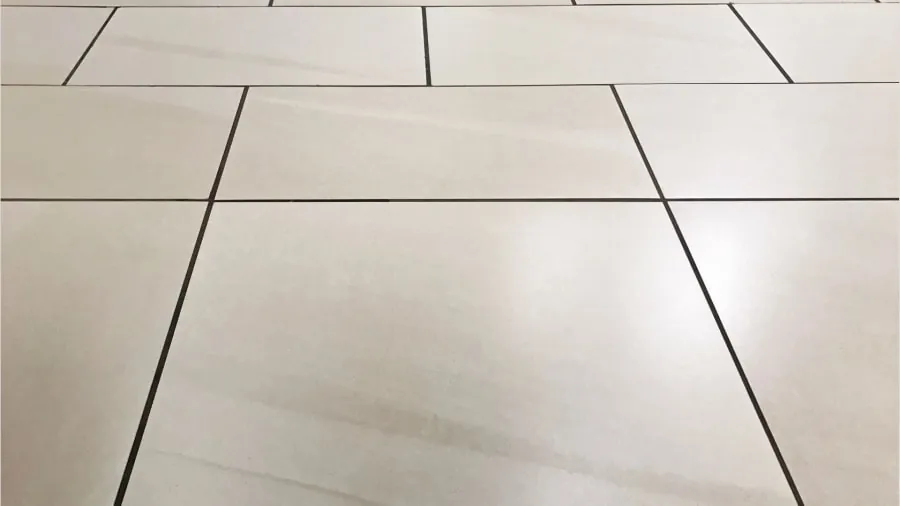
Grout is one of those decisions people leave until the last minute, and it is easy to see why. Next to choosing tiles, worktops and cabinets, the colour of the stuff between the tiles feels like a footnote. In reality it is one of the biggest levers you have over the finished look. The same tile can read as clean and understated or bold and graphic depending purely on the grout you pair with it. Here is how we help Bath homeowners get it right.
Matching vs Contrasting Grout
The first choice is whether the grout should blend in or stand out.
- Matching grout sits close to the tile colour, so the joins almost disappear. The surface reads as one continuous plane, which looks calm and modern and is a good way to make a wall or floor feel larger. It is the natural pick for large-format tiles and pared-back schemes.
- Contrasting grout deliberately outlines every tile. It turns the layout into the feature and shows off the pattern, which is why it works so well with metro tiles, herringbone and geometric designs. Dark grout with a white tile is a classic combination that never really dates.
Neither is better. It comes down to whether you want the tile to be a quiet backdrop or the star of the room.
Light vs Dark: How It Changes the Look
Grout tone shifts the whole feel of a space. Pale grout keeps things soft, airy and seamless, and it helps a small kitchen feel more open. Darker grout brings definition, structure and a more graphic, contemporary edge. It also frames the tiles in a way that draws attention to good craftsmanship - which is a point in its favour when the tiling has been fitted well.
Lighting matters here too. Grout that looks like a safe mid-grey on a sample board can read much lighter under bright kitchen downlights or much warmer under soft pendant lighting. We always suggest looking at samples in the actual room, at different times of day, before you commit.
Maintenance and Staining
The practical side of grout colour is easy to underestimate. A kitchen is a messy place, and pale grout around the hob and sink shows grease, splashes and staining far sooner than a mid-tone. If low upkeep is a priority, a grey or taupe grout hides day-to-day marks while still looking smart. Whatever colour you land on, sealing the grout makes a real difference to how well it resists stains and how easily it wipes clean. We cover this as standard, and it is one of the details that keeps a kitchen renovation looking fresh for years.
Getting the Decision Right First Time
Changing grout colour after the fact is possible but rarely tidy - it means tinted sealers or raking out and re-grouting, neither of which is as good as choosing well from the outset. Because it is such a low-cost element with such a high visual impact, grout is one of the best-value decisions in the whole project. Our fitters will show you options against your chosen tiles as part of our tiling services, so the finished result is exactly what you pictured. If you would like to talk it through, feel free to get in touch.
Frequently Asked Questions
Should grout match the tile or contrast with it?
It depends on the effect you want. Matching grout makes the tiled surface read as one calm, seamless whole and hides the joins, which suits a minimal look. Contrasting grout outlines each tile and turns the layout into a feature - ideal for metro tiles, herringbone patterns and anything geometric. There is no wrong answer, only the look that suits your kitchen.
Is light or dark grout easier to keep clean?
Mid-tone and darker grout is the more forgiving choice in a working kitchen. Pale grout, especially bright white, shows grease, tea stains and general grime much more readily, particularly around the hob and sink. If you love the look of white grout, a good sealer and regular cleaning keep it presentable.
Can grout colour make a small kitchen look bigger?
Yes. Grout that closely matches a light tile removes the visual clutter of lots of dark lines, so the surface feels larger and more continuous. That trick works well in the compact kitchens common in many Bath homes and flats.
Can the grout colour be changed after the tiles are fitted?
To a degree. Grout can be cleaned, sealed with a tinted sealer, or in some cases raked out and replaced, but none of these is as clean as choosing the right colour at the start. It is always worth getting the decision right during installation rather than trying to correct it later.