
14 August 2026
Integrated or Freestanding Appliances for Bath Kitchens
Appliances are the workhorses of a kitchen, and one early decision shapes the whole look and budget: integrated or freestanding. Integrated appliances tuck behind cabinet doors for a built-in finish; freestanding ones stand on their own and stay visible. Both have a place, and the right answer depends on your kitchen, your budget and, in Bath, the kind of home you live in. So many kitchens here sit in narrow period terraces where every design choice counts, and a chimney recess can be the perfect home for a range cooker. Here is an honest comparison to help you choose, with an eye on what actually works in a Bath home.
Integrated or Freestanding: What’s the Difference?
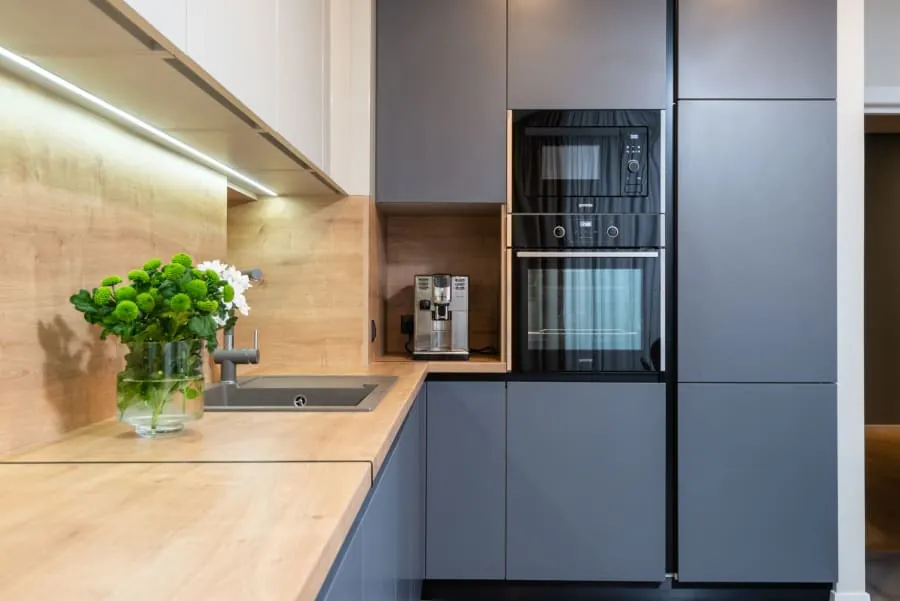
The distinction is simple. Integrated (or built-in) appliances are fitted into the cabinetry and often hidden behind a matching door, so the kitchen reads as one continuous run of units. Freestanding appliances - the classic fridge, cooker or washing machine - sit in a gap and stay on show.
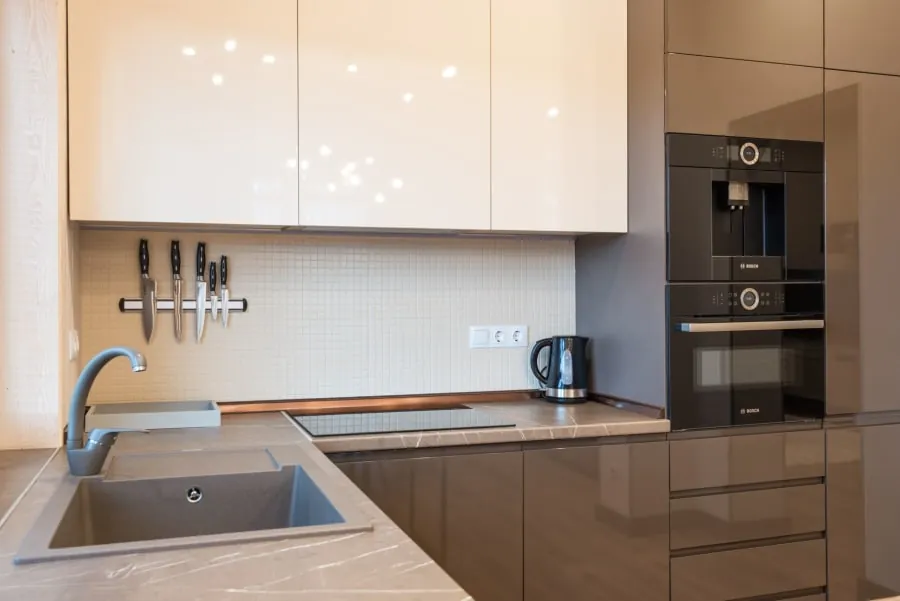
That one choice ripples through the whole design, the budget and even how easy things are to replace years later. It is worth deciding early, because integrated appliances need the cabinetry built around them. We plan this from the start of any appliance installation, so the units and appliances are designed as one rather than forced together at the end.
Integrated Appliances: The Built-In Look
Integrated appliances give the clean, uncluttered finish that modern kitchens are known for. Fridges, freezers, dishwashers and even washing machines disappear behind cabinet fronts, so nothing interrupts the run of units. In a small kitchen especially, that calm, unbroken look makes the space feel larger and more considered.
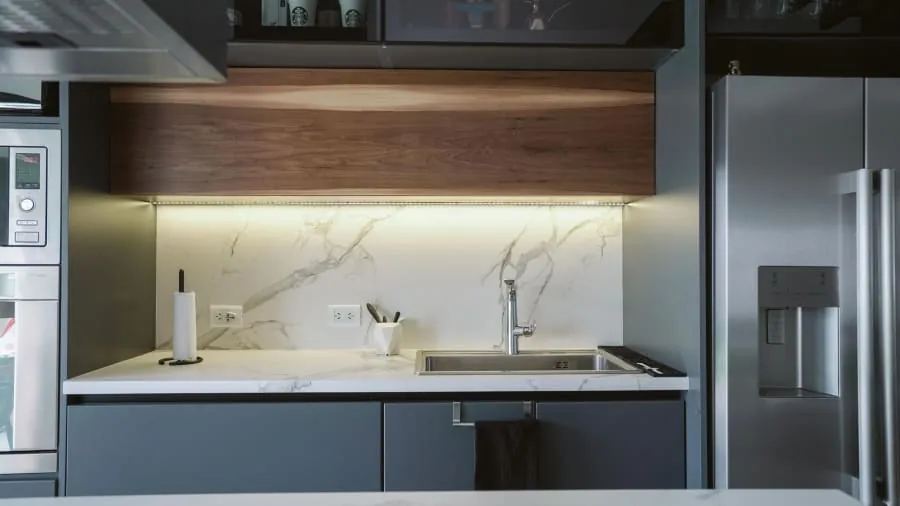
The trade-offs are cost and flexibility. Integrated units usually cost a little more, take longer to fit, and lock you into the same format when you replace them. They are also sized to standard cabinet dimensions, so choice can be slightly narrower than the freestanding market. For a design-led kitchen where the look matters most, though, integrated is usually worth it.
Freestanding Appliances: Flexible and Easy to Replace
Freestanding appliances are the practical, budget-friendly choice. They are cheaper to buy, quicker to install, and you can simply unplug and swap one out if it breaks or you fancy an upgrade. You can also take them with you when you move, which suits renters and anyone watching the budget.

The choice is huge, too - freestanding appliances come in every size, colour and spec, including statement pieces like an American-style fridge-freezer or a colourful range cooker. The downside is the look: gaps around a freestanding unit collect crumbs, and a mismatched appliance can break up an otherwise smart kitchen. Chosen well, though, freestanding can look every bit as good as integrated.
Which Suits a Small Bath Terrace Kitchen?
In the compact kitchens of Bath’s terraces, this decision really earns its keep. Integrated appliances tend to win in a small space because the built-in look keeps things visually calm and avoids the boxy interruptions that make a tight room feel busier than it is.
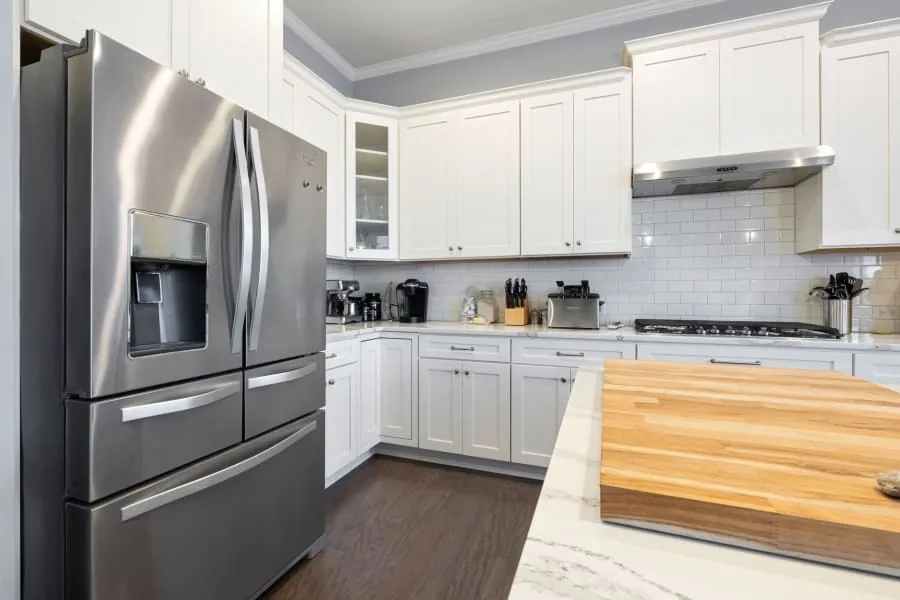
That said, a small kitchen also needs every appliance to earn its place, so a slimline freestanding option can work where budget is tight. The key is planning the exact sizes into the layout - a fridge that sticks out past the units or a washing machine wedged into a gap that is a centimetre too small are the kind of avoidable errors that a proper plan catches. Careful measuring beats guesswork every time.
Range Cookers in Period Bath Kitchens
One place freestanding shines is the range cooker, and Bath’s period homes are made for it. A wide range cooker suits the generous proportions of a Georgian or Victorian kitchen and often slots beautifully into a former chimney recess, making a natural feature of what was once the hearth.
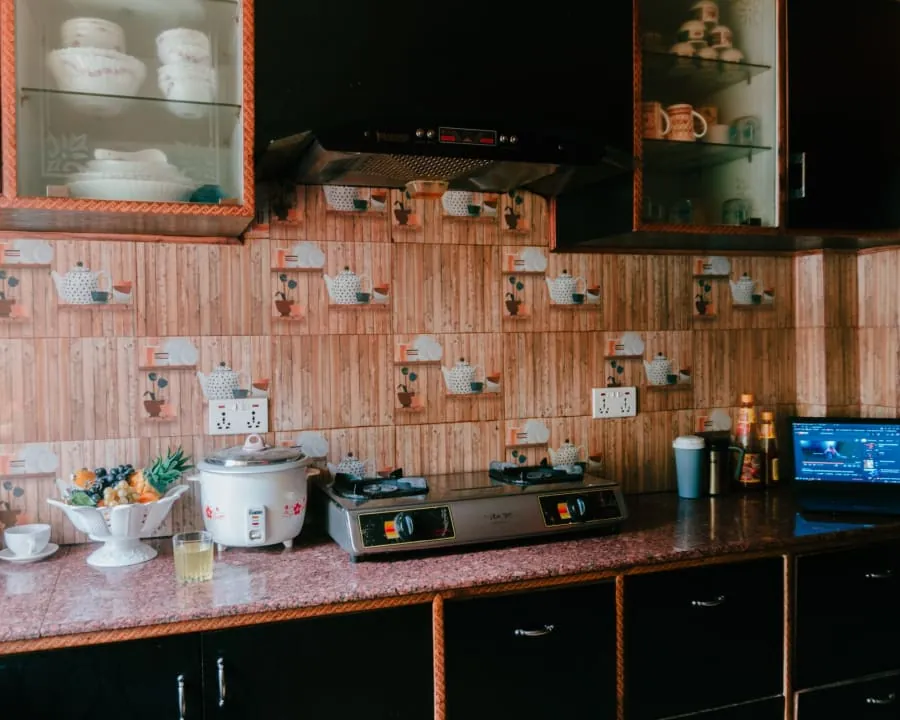
The practical points to check early are width and fuel. Range cookers come in 90cm, 100cm and larger, so the recess or gap has to suit, and if you want gas you need the right connection in the right place. Pairing a range with a good extractor matters too, as we cover in our guide to kitchen ventilation and extractor fans. Planned in from the start, a range cooker is often the centrepiece of a period Bath kitchen.
Cost, Energy Ratings and Running Costs
Budget is more than the sticker price. Integrated appliances cost a little more to buy and fit - an oven installation alone runs around £150, per Checkatrade - while freestanding units are cheaper up front and quicker to replace. Factor the fitting into the plan, not just the appliance.
Running costs matter more over time. Since 2021 the UK energy label uses a simpler A to G scale, and choosing a higher-rated appliance saves money and energy for years - the Energy Saving Trust has good guidance on this. There is a Bath angle here too: hard water scales up any appliance with a heating element, so a dishwasher or washing machine lasts longer if you soften the water or descale regularly.
Getting Appliances Right in Your Kitchen
The best approach is to decide the integrated-versus-freestanding question at the design stage, size everything precisely, and think about energy ratings and hard water while you are at it. Mixing the two is common and sensible - integrated fridge and dishwasher for the clean look, a freestanding range cooker as a feature.
Whatever you choose, the appliances need to be planned into the cabinetry and the services from the outset, which is exactly what a full kitchen renovation does. If you would like help choosing and fitting appliances that suit your Bath kitchen and its water, get in touch for a free quote.
Frequently Asked Questions
Are integrated or freestanding appliances better for a Bath kitchen?
It depends on the look and budget you want. Integrated appliances hide behind cabinet doors for a built-in, streamlined finish that suits modern and compact Bath kitchens. Freestanding appliances are cheaper, easier to replace and simple to take with you when you move. Neither is better outright - integrated tends to suit design-led kitchens, freestanding suits flexibility and tighter budgets.
Do integrated appliances cost more?
Usually, yes. The appliances themselves can cost a little more, and they take longer to fit because they are built into the cabinetry, so labour is higher. You also replace them with the same integrated format later. Freestanding appliances are cheaper to buy and quicker to swap out, which is part of their appeal for a budget-conscious kitchen.
Can I have a range cooker in a period Bath home?
Yes, and it often looks superb. A freestanding range cooker suits the proportions of a Georgian or Victorian kitchen and can slot neatly into a former chimney recess. Just check the width and the fuel supply early - a wide range needs the space and, for gas, the right connection, which is worth planning before the units are ordered.
Does hard water affect kitchen appliances in Bath?
It does. Bath’s very hard water leaves limescale in kettles, dishwashers and washing machines, and in anything with a heating element. It shortens appliance life if left unchecked. Many local homeowners fit a water softener or use appliance descalers regularly - a renovation is the ideal time to plumb in a softener while the pipework is open.