
27 August 2026
Living Without a Kitchen During a Bath Renovation
Nobody books a kitchen renovation because they are looking forward to the middle bit. The design is exciting, the finished room is the point, and the fortnight in between is the part people describe afterwards with a slight grimace. It does not have to be that bad. A typical Bath kitchen replacement runs to ten or fifteen working days, and of those, only two to four leave you genuinely without water in the room. From the enquiries we take, the households who cope best are almost always the ones who spent an afternoon setting up before strip-out day rather than improvising on the morning the units came out. So this is the practical version - where to put things, what to buy, and the local details that catch Bath homeowners out.
How Long You Will Actually Be Without a Kitchen
The number that matters is not the length of the job, it is the length of each gap. Strip-out takes a day. The units usually go in over the following two to four days. Then, on most jobs, everything stops while the worktop is templated and made, which is where the calendar quietly gains a week.
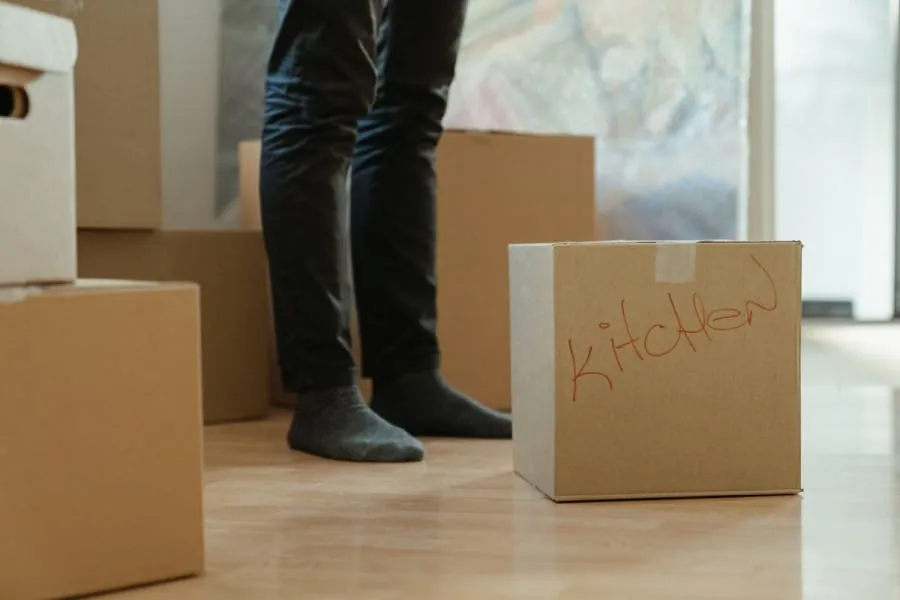
Understanding that shape changes how you prepare. You are not camping for three weeks; you are camping hard for four or five days and then living slightly awkwardly for the rest. Before you plan anything else, get your fitter to mark two dates on the schedule: sink out, and sink back in. Ask early whether any of the work needs building regulations approval as well, because new circuits or a relocated extractor bring a sign-off stage that can add days at the end. Everything else follows from those. If you want the fuller picture of how the stages fall, our breakdown of how long a kitchen installation takes in Bath sets out where the pauses usually land.
Where the Temporary Kitchen Goes in a Bath House
The instinct is to set up in the dining room, next to the kitchen. That is usually the wrong choice, because the dining room is where the units get stacked and the offcuts pile up. Pick a room the work never passes through.

In the Victorian terraces around Oldfield Park and Moorland Road, that often means the front room, because there is no side return and everything has to come through the hall. In a Combe Down or Odd Down semi with a side gate, the dining room is usually fine and the front room stays yours. Lower-ground kitchens in the Georgian houses are the awkward case: everything has to go up or down a staircase, so the temporary kitchen wants to be on the same floor as the front door, not the same floor as the old one.
Whatever room you pick, you want a table at working height, a double socket that is not shared with power tools, and somewhere to put a bin. Lay an old sheet or a cheap vinyl remnant under the table. Two weeks of tin openers and toast crumbs will do more to your carpet than the builders will.
The Three Appliances That Do Most of the Work
You do not need to recreate a kitchen. You need a heat source, a cold source and hot water, and almost everything else is a bonus.
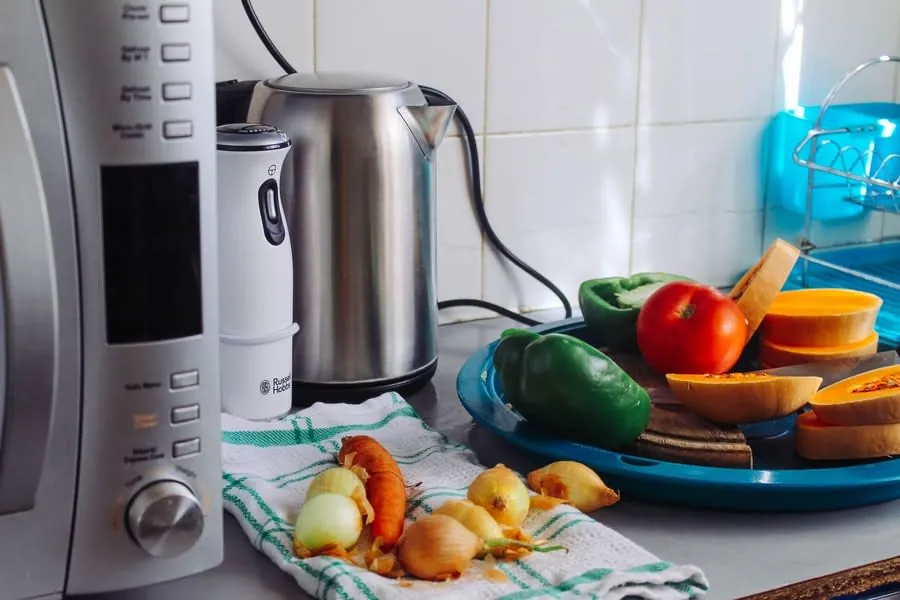
The microwave does more than people give it credit for, especially if you batch cook. The kettle covers tea, pasta, couscous, instant porridge and washing-up water. The third slot is the argued-over one, and for most households an air fryer beats a single induction plate: it roasts, it does chips and chicken, and it does not need a pan. If you cook from scratch and hate the idea, take the induction plate instead, but be aware that a 2kW plate plus a kettle on the same ring main will trip a breaker, so run them on different circuits.
Move the fridge out on strip-out morning and keep it running. A freezer full of food you cooked the weekend before is the single biggest thing that separates a calm fortnight from an expensive one. Also worth having: a decent chopping board, two sharp knives, a colander, and paper plates for the days when washing up is genuinely not happening.
Washing Up When You Have No Sink
This is the bit everyone underestimates. Two adults generate a startling amount of washing up in a day, and the bathroom basin is not designed for a roasting tin.

Two washing-up bowls in the bath works better than anything else - one to wash, one to rinse - and it keeps grease out of the basin waste, which is narrower and blocks easily. Boil the kettle, do it in one go once a day rather than item by item, and tip the water down the toilet rather than the bath waste so the fat does not sit in the trap. If you have an outside tap, a bowl on a garden table is even better in summer.
Bath’s water is hard, drawn from the limestone of the Mendips, so everything you wash in the bathroom will dry with spots and the kettle will fur up faster than usual on constant boiling. It is cosmetic rather than a problem, but it is worth knowing before you decide your new glasses are ruined.
Dust, and Why Older Bath Houses Make More of It
Every renovation makes dust. Older Bath properties make a particular kind of it, because behind the old units there is often lime plaster, and above the ceiling there is a century of dry, fine debris that comes down the moment anything is unscrewed from a joist.

Ask for a zip-door dust screen across the kitchen doorway rather than a sheet pinned up with tape, and ask whether the strip-out will be done with dust extraction on the tools. Close internal doors on the day and take soft furnishings out of the adjoining room. If the ground floor has a fitted carpet running through, self-adhesive carpet protection film is about fifteen pounds a roll and worth every penny.
One genuine safety point applies to any Bath kitchen fitted before around 2000. Old vinyl floor tiles, textured ceiling coatings and some board behind cookers can contain asbestos, and it must not be broken up by anyone untrained. The HSE’s guidance on where asbestos is still found in buildings explains what to look out for. A good fitter will flag it at survey stage, not discover it with a bolster chisel.
Parking, Skips and Getting a Kitchen Into a Terrace
This is the Bath-specific chapter that catches people out, and it costs real money if it goes wrong. Much of the city sits inside residents’ parking zones, and a fitter’s van left outside for eight hours without cover will collect a ticket a day. Sort permits before the first delivery - Bath and North East Somerset Council explains the residents’ and visitor parking permit options for the city, and most households can arrange trade cover for the duration.
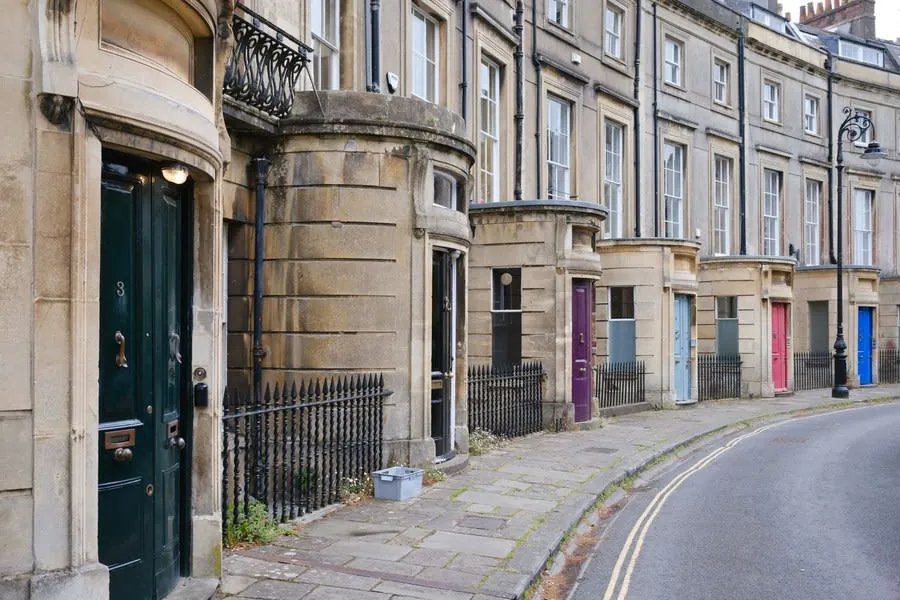
Bath’s Clean Air Zone is the other thing worth asking about. It charges older, non-compliant vans and lorries entering the central zone, which affects delivery lorries as much as fitters, so a kitchen supplier may schedule your drop for a particular time or ask to unload at the kerb rather than nose into a narrow street. Neither is a problem if you know in advance and are not expecting an articulated lorry to reverse up a Lansdown hill.
Skips need a licence if they go on the highway rather than a driveway, and on steep or narrow streets a skip may not be practical at all - many Bath jobs use a van-and-tip arrangement instead. Ask which your fitter is planning, because a skip outside your door for a fortnight in a permit zone is a conversation with the neighbours you would rather not have.
Feeding Everyone Without Living on Takeaways
Two weeks of deliveries will add several hundred pounds to a project you have already spent carefully on, and it stops being fun by about day four.

The Sunday before strip-out, cook and freeze eight to ten portions of things that reheat well: bolognese, chilli, curry, soup, a lasagne in a foil tray. Buy a fortnight of breakfast and lunch in one shop so you are not making daily decisions in a house with no kitchen. Then allow two or three planned meals out across the whole job as a treat rather than a fallback, and it stays enjoyable instead of becoming the default.
A small thing that helps more than it should: keep one clean, tidy corner of the temporary kitchen, wipe it down every evening, and do not let it become the surface everything lands on. A fortnight of eating off a cluttered table is what makes people describe a renovation as miserable, and it is entirely avoidable.
Most of this is planning rather than money, and the households that find a kitchen renovation in Bath genuinely manageable are simply the ones who did the setting-up on a quiet Sunday instead of at eight o’clock on strip-out morning. The room at the end is worth a fortnight of slight inconvenience. It is not worth a fortnight of chaos, and it does not need to be one.
Get a quote for your Bath kitchen and we will talk you through the schedule, the pauses and the practical arrangements before anything comes out.