
15 July 2026
Kitchen Splashback Ideas for Bath Homes
The splashback is a small area that does a lot of work. It protects the wall behind your worktop and hob from splashes, steam and grease, and it is often the detail that gives a kitchen its personality. For such a modest strip of wall, it punches well above its weight in both practicality and style. In Bath, two local factors quietly shape the choice: the very hard water that leaves limescale on glossy surfaces, and the period character of so many homes that suits some materials better than others. Here is a run-through of the main splashback options, what they cost, and how to pick one that works for a Bath kitchen.
Why the Splashback Matters More Than You Think
A splashback has one essential job - keeping water, oil and food off the wall where they would otherwise stain and damage the plaster or paint. Behind a hob and around a sink, that protection is not optional; it is the difference between a wall that stays smart and one that looks grubby within months.
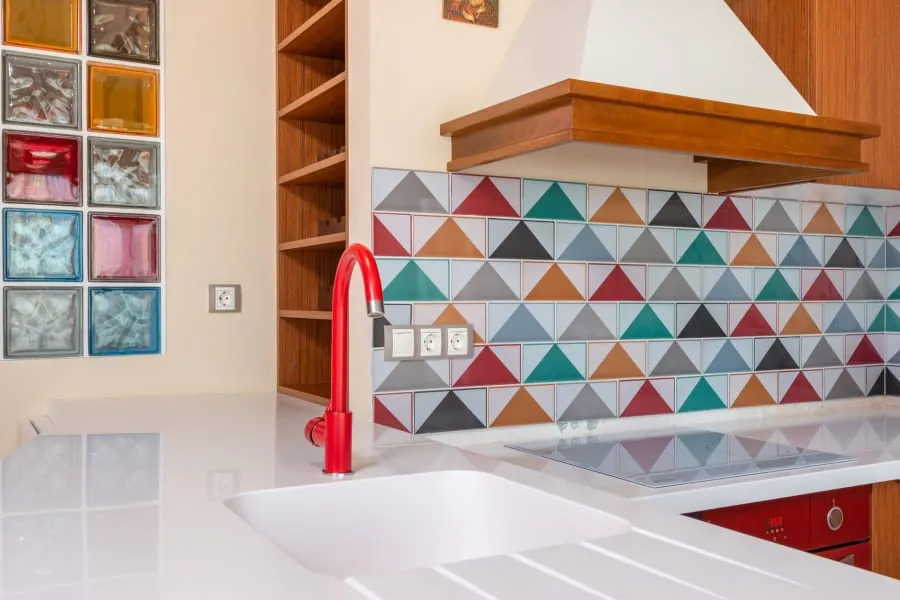
Beyond the practical, it is a chance to add colour, texture or a bit of shine at eye level, tying the units and worktop together. Because it is a small area, it is also somewhere you can be a little braver than you would across a whole run of cabinets. We plan the splashback alongside the worktop and units in a full kitchen renovation so the three work as one.
Tiled Splashbacks: Classic and Versatile
Tiles are the traditional splashback and still the most versatile. They come in endless colours, shapes and finishes, they cope well with heat and water, and a damaged tile can be replaced without redoing the whole thing. For flexibility and range, nothing else comes close.
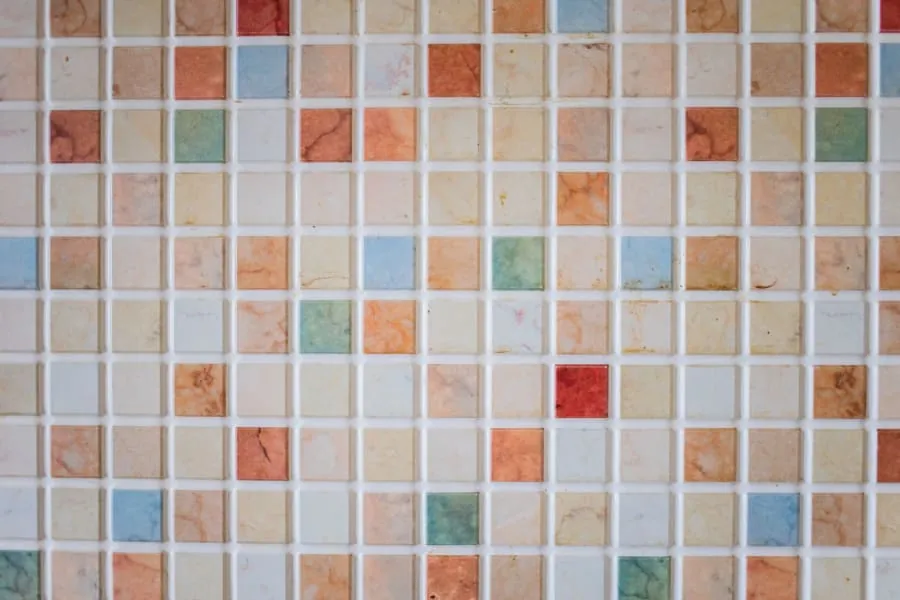
On cost, a tiled splashback runs roughly £60 to £100 per square metre installed, with most jobs landing between £100 and £400 depending on the tile and area, according to guides like Checkatrade. The one thing to keep on top of in hard-water Bath is the grout, which can pick up marks over time - a point we cover in our guide to choosing grout colour. Get the grout right and a tiled splashback lasts for years.
Glass Splashbacks: Sleek and Grout-Free
A glass splashback gives a smooth, uninterrupted finish with no grout lines at all, which makes it one of the easiest surfaces to keep clean. It can be made in almost any colour, reflects light beautifully, and suits a modern kitchen down to the ground - especially a compact one, where it bounces light around.
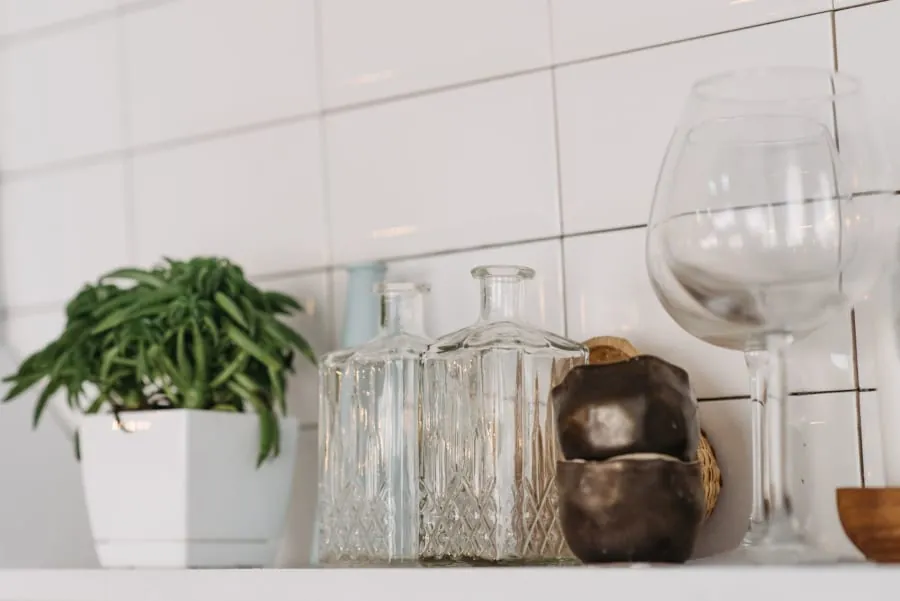
The Bath caveat is hard water. A glossy glass surface near the hob and sink shows watermarks and splashes more readily than a matt finish, so it needs a quick wipe to stay pristine - easy to do, just a little more often here than in a soft-water area. On cost, a standard glass splashback is typically a few hundred pounds, rising with size and colour, plus fitting. For a clean, low-grout look, it is hard to beat.
Stone and Quartz Splashbacks: Joint-Free Luxury
Running your worktop material up the wall as a splashback is a premium look that ties the whole kitchen together. A quartz or stone splashback in the same slab as the worktop gives a continuous, joint-free finish that feels genuinely high-end.
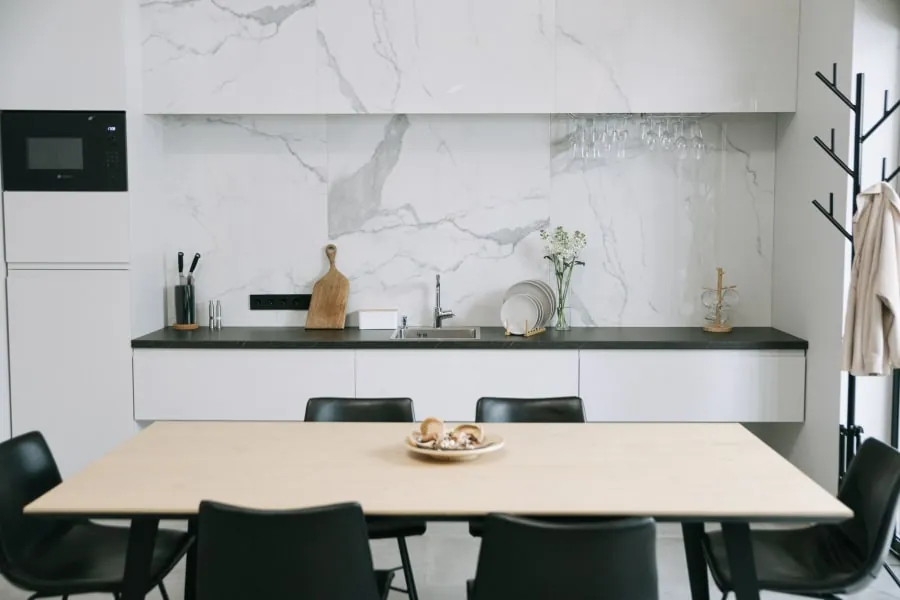
Quartz is the practical choice of the two because it is non-porous, so it shrugs off hard-water marks and needs no sealing - a real plus in Bath. Natural stone looks stunning but is porous and needs sealing to avoid staining and etching near the hob. It is the priciest splashback option, but for a coordinated, luxurious kitchen it is money well spent, and it pairs naturally with the worktops we cover in our worktops guide.
Metro and Patterned Tiles for Period Homes
For Bath’s Georgian and Victorian homes, tiles with a bit of character often suit best. Metro tiles - the rectangular brick-shaped classic - have been popular for years because they sit comfortably in both period and modern kitchens, and the way they are laid (straight, brick-bond, herringbone) changes the whole feel.
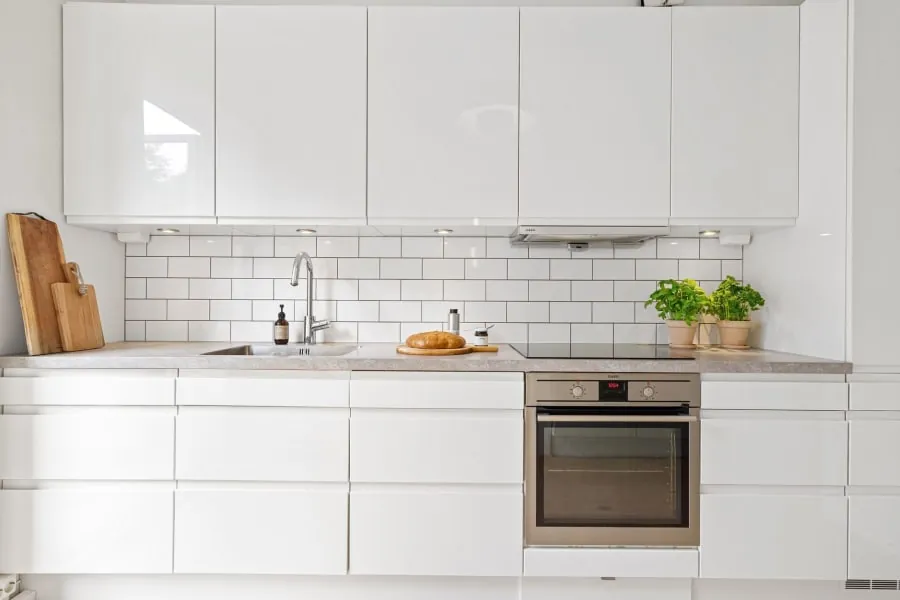
Handmade-look ceramics, patterned tiles and encaustic-style designs also add heritage charm behind a worktop, echoing the age of the house without feeling like a theme park. The trick in a period home is to let the splashback complement the cabinetry and worktop rather than compete with all of them at once. A considered tile choice can be the detail that makes a period Bath kitchen feel authentic.
The Splashback Behind the Hob
The area behind the hob works hardest of all, taking the most heat, grease and splatter, so it deserves particular thought. Whatever material you choose elsewhere, behind the hob it needs to handle heat and wipe clean easily - glass, stone, quartz and ceramic tiles all do this well.
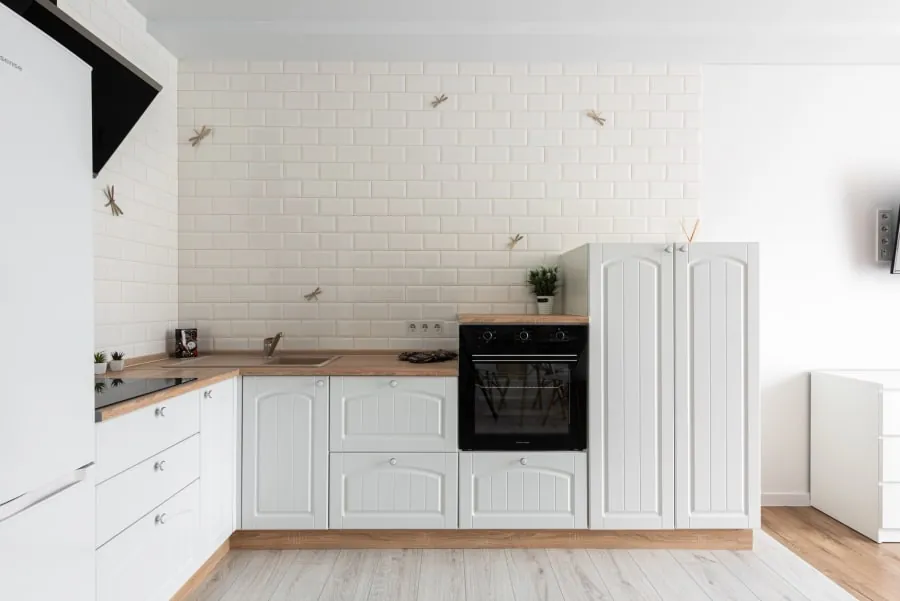
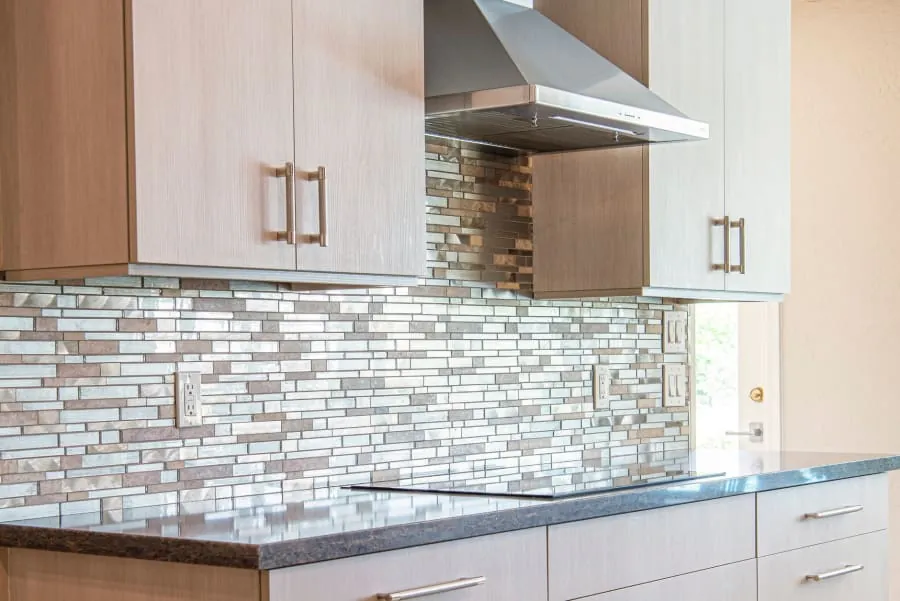
Many kitchens make a feature of this zone, running a taller or bolder splashback behind the hob than along the rest of the run - a patterned panel, a slab of stone, or a colour that draws the eye. If you have an extractor or cooker hood here, the splashback and the hood need to work together visually, which is worth planning at the design stage rather than bolting together later.
Choosing a Splashback for Your Bath Kitchen
The right splashback balances how it looks, how it copes with heat and water, and how much cleaning you are happy to do. In hard-water Bath, a wipeable, low-grout surface like glass or quartz keeps life easy, while tiles give the widest choice and suit period homes beautifully. Match it to the worktop, the units and the age of the house.
For material costs and how the splashback fits into the wider budget, the general kitchen guides from Which? are a useful reference. Whatever you lean towards, our tiling and splashback service fits it properly, and we are happy to bring samples to see against your units. If you would like help choosing, get in touch for a free quote.
Frequently Asked Questions
What is the best splashback material for a Bath kitchen?
It depends on the look and the upkeep you want. Tiles are versatile and suit period and modern homes alike. Glass gives a grout-free, easy-wipe finish but shows Bath’s hard-water marks if not wiped. Stone and quartz look luxurious and can match a worktop, though natural stone needs sealing. For a busy family kitchen in a hard-water area, a wipeable surface like glass or quartz is often the practical pick.
How much does a kitchen splashback cost?
As a rough guide, a tiled splashback runs about £60 to £100 per square metre installed, with total tile jobs often £100 to £400. A glass splashback is typically a few hundred pounds for a standard run, rising with size and colour, and labour usually adds £150 to £400. Stone and quartz sit at the premium end. The final cost depends on the area covered and the material.
Do glass splashbacks show limescale in Bath?
They can. Bath has very hard water, so a glossy glass splashback near the hob and sink shows watermarks and the odd splash more readily than a matt finish. The upside is that glass has no grout lines and wipes clean in seconds, so keeping it spotless is quick - it just needs doing a little more often here than in a soft-water area.
What splashback suits a period Bath kitchen?
Tiles tend to suit period homes best. Metro tiles, handmade-look ceramics and patterned or encaustic-style tiles all sit comfortably in a Georgian or Victorian kitchen and let you add character behind the worktop. A tile that complements the cabinetry and worktop, rather than competing with it, is usually the safest route to a look that lasts.